

Emerson Heights
Menu
  • External link opens in new tab or window
  • External link opens in new tab or window

ApplyApply

  • External link opens in new tab or window+1.979.999.1115
  • External link opens in new tab or windowinfo@emersonheights.com

 Floorplans


Column

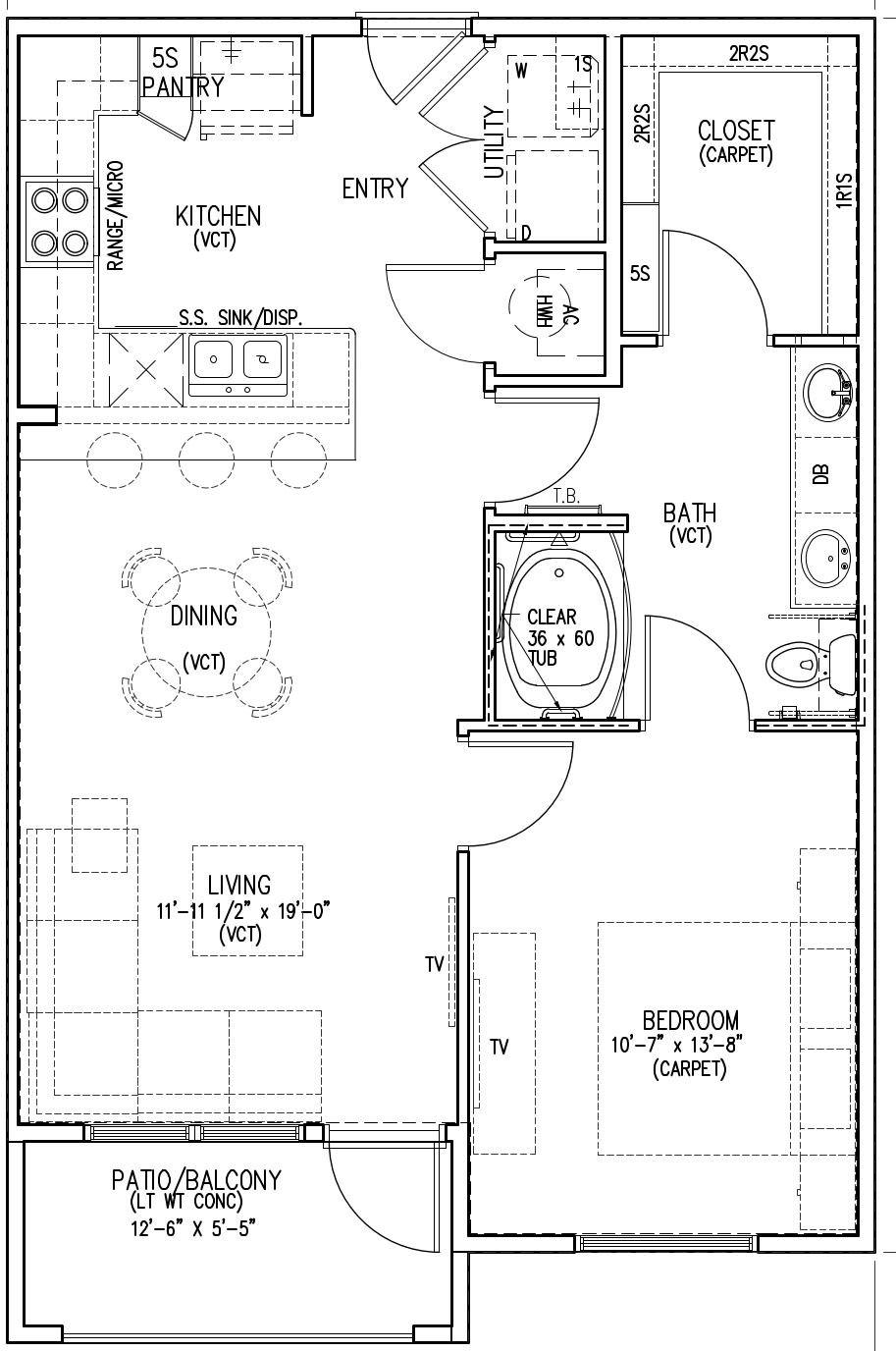
1 Bed/ 1 Bath

753 sq ft


Click to edit


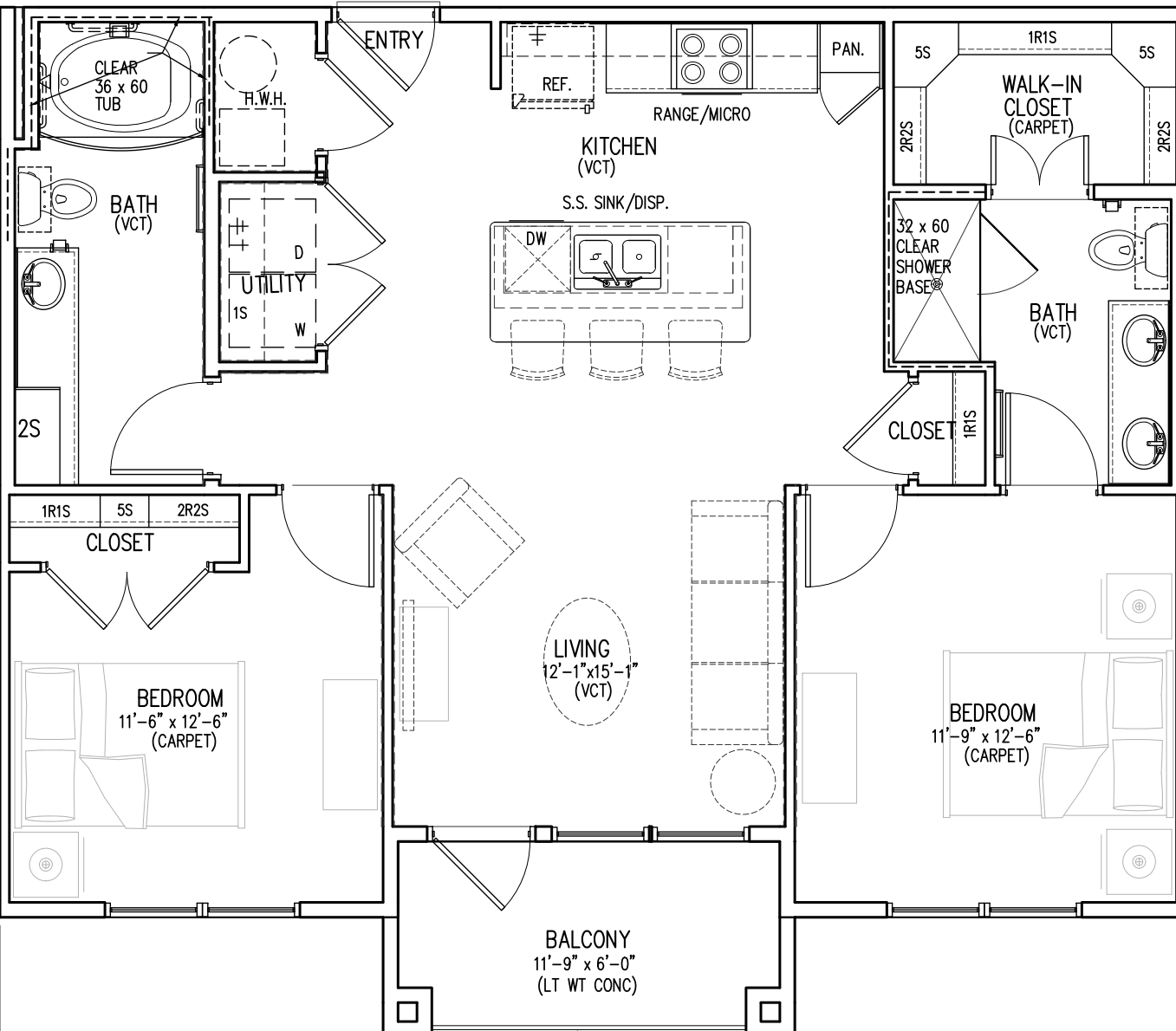
2 Bed/ 2 Bath

990 sq ft


Column


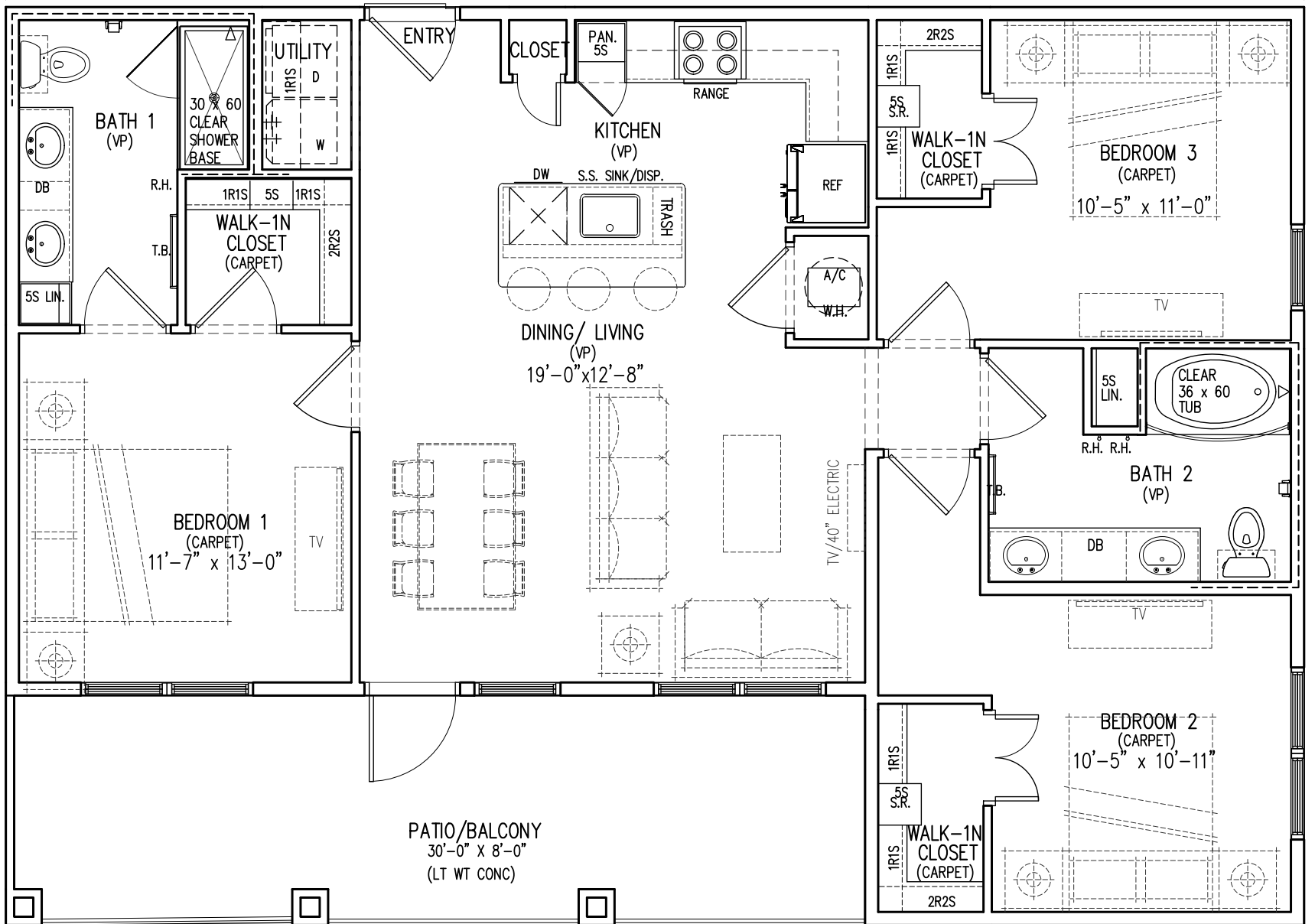
3 Bed/ 2 Bath

1,200 sq ft


Column

Small ribbon icon  

1 Bed/ 1 Bath


$678 (IB)

$995 (M)


Column

Small ribbon iconSmall ribbon icon

2 Bed/ 2 Bath


$873 (IB)

$1,195 (M)


Column

Small ribbon iconSmall ribbon iconSmall ribbon icon

3 Bed/ 2 Bath


$1,239 (IB)

$1,370 (M)


IB - Income Based Rate

To qualify for this rate, your household income needs to be below the set limits.


M - Market Rate


No maximum income limits are set for this rate. The standard qualification process still be applied.


Deposit

$750 (1 bed units)/ $850 (2 bed units)/ $950 (3 bed units)

$425, Non-refundable pet deposit per pet


Utility Allowance - 2025
1  BR2 BR 3 BR
$88$109$131


 We are here to help low to moderate income families. 


 Income Based Rate Units

Income Limit

Number of HouseholdIncome Limits
1$46,550
2$53,200
3$59,850
4$66,500
5$71,850
6$77,150
Application

External link opens in new tab or windowApplication/ External link opens in new tab or windowStudent Eligibility/ External link opens in new tab or windowAssets Form/ External link opens in new tab or windowConsent Form


Supporting Documents:

  • Paycheck stubs ( last 2 months)
  • Checking account statements (last 1 month)
  • Savings account statement (last 1 month)
  • Additional income statement such as child support and investments.
  • Childcare or medical expenses that are unreimbursed.


 Please, don't worry.  We can still help you, even if your income exceeds the limits. 


 Market Rate Units

External link opens in new tab or windowApplication

No income restrictions applied

Online Application/ Background Check
Most recent 2 months' paycheck stubs


Criteria

A g e – Lease holder(s) must be 18 years or older, unless head of household. All occupants 18 years or older are required to complete an application, even if living with parent or guardian.


O c c u p a n c y  S t a n d a r d – A maximum of two persons per bedroom are allowed. Persons under eighteen (18) months of age are not considered in this calculation.

I  n  c  o  m  e — Gross monthly income of all lease holder(s) must equal 3 times the monthly rental amount. All income must be verifiable. Income does not include allowance from parents, scholarships, or study subsidies.

E  m  p  l  o  y  m  e  n  t — Applicant must 1) be employed with current employer for at least six months; 2) have current job and at least six months employment with previous employer; or 3) receiving retirement benefits, government benefits, or any other verifiable and consistent income.

B  a  c  k  g  r  o  u  n  d — No applicant, resident or occupant may have been indicted, arraigned, or convicted of a felony charge. Backgrounds on all adult occupants will be checked.

C  r  e  d  i  t — Minimum of 600 credit score is required.  Unsatisfactory credit references or no credit history may result in the requirement of an additional deposit or denial.

A  p  p  l  i  c  a  t  i  o  n   F  e  e —  A $50 non-refundable application fee is required per person over the age of 18 years.

S e c u r i t y  D e p o s i t — $750 (1bed), $850 (2bed) and $950 (3 bed)

A  n  i  m  a  l  s – A maximum of 1 pet(s) per apartment is permitted. Dogs whose breed or dominant breed weight exceeds 30 pounds at maturity are not accepted. Exotic animals and reptiles are not accepted. Additional restrictions may apply. Support animals are not considered pets and are allowed to reasonably accommodate a handicapped leaseholder or occupant.
Pet deposit is $425 and non-refundable.

I n s u r a n c e - All residents are required to carry a rental insurance policy.

LEP

 POLICY AND PROCEDURES FOR COMMUNICATION WITH PERSONS WITH LIMITED ENGLISH PROFICIENCY


POLICY:

Enclave on Independence will take reasonable steps to ensure that persons with Limited English Proficiency (LEP)

have meaningful access and an equal opportunity to participate in our services, activities, programs and other

benefits. The policy of Enclave on Independence is to ensure meaningful communication with LEP

applicants/residents and their authorized representatives involving their application process. The policy also

provides for communication of information contained in vital documents, including but not limited to, waivers of

rights, consent to treatment forms, financial and personal information forms, etc. All interpreters, translators and

other aids needed to comply with this policy shall be provided without cost to the person being served, and

patients/clients and their families will be informed of the availability of such assistance free of charge.

Language assistance will be provided through use of competent bilingual staff, staff interpreters, contracts or formal

arrangements with local organizations providing interpretation or translation services, or technology and telephonic

interpretation services. All staff will be provided notice of this policy and procedure, and staff that may have direct

contact with LEP individuals will be trained in effective communication techniques, including the effective use of an

interpreter.

On an ongoing basis, Enclave on Independence will assess changes in demographics, types of services or other

needs that may require reevaluation of this policy and its procedures. In addition, Enclave on Independence will

regularly assess the efficacy of these procedures, including but not limited to mechanisms for securing interpreter

services, equipment used for the delivery of language assistance, complaints filed by LEP persons, feedback from

residents and community organizations, etc.


Fair Housing

  • Advertise or make any statement that indicates a limitation or preference based on race, religion, color, sex, national origin, disability or familial status. This prohibition against discriminatory advertising applies to all housing, including single-family and owner-occupied housing that is otherwise exempt from the Texas Fair Housing Act
  •  Harass, coerce, intimidate, threaten or interfere with anyone exercising a fair housing right or assisting others who exercise their fair housing rights In the Sale & Rental of Housing
  • Refuse to rent or sell housing
  • Refuse to negotiate for housing
  • Advertise housing to preferred groups of people only
  • Show apartments or homes in certain neighborhoods only
  • Say that housing is unavailable for inspection, sale or rental when in fact it is available
  • Set different terms, conditions or privileges for sale or rental of a dwelling
  • Provide different housing services or facilities
  • Deny access to or membership in a facility or service (such as a multiple listing service) related to the sale or rental of housing
  •  Refuse to make certain modifications or accommodations for persons with a mental or physical disability


Under the U.S. Fair Housing Act and Texas Fair Housing Act, no one may take any of the following actions in the sale and rental of housing or in mortgage lending based on race, color, religion, sex, national origin, disability or familial status.


VAWA Protection

VIOLENCE AGAINST WOMEN AND JUSTICE DEPARTMENT REAUTHORIZATION ACT OF 2005 (VAWA)

1. The Landlord may not consider incidents of domestic violence, dating violence or stalking as

serious or repeated violations of the lease or other “good cause” for termination of assistance,

tenancy or occupancy rights of the victim of abuse.

2. The Landlord may not consider criminal activity directly relating to abuse, engaged in by a
member of a tenant’s household or any guest or other person under the tenant’s control, cause
for termination of assistance, tenancy, or occupancy rights if the tenant or an immediate
member of the tenant’s family is the victim or threatened victim of that abuse.

3. The Landlord may request in writing that the victim, or a family member on the victim’s
behalf, certify that the individual is a victim of abuse and that the Certification of Domestic
Violence, Dating Violence or Stalking, Form HUD-91066, or other documentation as noted
on the certification form, be completed and submitted within 14 business days, or an agreed
upon extension date, to receive protection under the VAWA. Failure to provide the
certification or other supporting documentation within the specified timeframe may result in
eviction.


Citizenship and SSN

Landlords are allowed to request identity documentation and conduct inquiries to determine whether a potential renter meets the criteria for rental, as long as the same process is applied to all potential renters. Singling out individuals to provide information regarding their immigration status because of their national origin is unlawful discrimination. For example, asking only Mexican immigrants for proof of immigration status and not asking the same documentation of other applicants is a violation of the Fair Housing Act.

Requiring that all applicants have a social security number disproportionately excludes prospective tenants based on national origin. If Social Security Numbers (SSN) are ordinarily used as part of the applicant screening process, alternative documents should be accepted, such as:
  • Citizenship Card/Consulate Cards
  • INS Form I-864 Sponsorship Verification
  • Certificate of Naturalization INS I-550
  • US Passport
  • Individual Taxpayer Identification Number (ITIN)
  • Unexpired foreign passport
  • Alien Registration Receipt Card with Photograph
  • Unexpired temporary resident card (I-688)
  • Unexpired employment authorization card (I-688A or I 688B)
  • Unexpired Reentry permit
  • Unexpired refugee travel document
  • Government-issued Driver’s License or ID card
  • INS Form I-864 Sponsorship Declaration
  • Federally recognized, tribal-issued photo ID

Housing providers who refuse to rent to prospective tenants due to their citizenship or immigration status may violate the Fair Housing Act’s prohibitions on national origin housing discrimination.


Unit Transfers


  • If an owner determines that a tenant’s current dwelling unit is smaller or larger than appropriate as a result of a change in a tenant’s family size or composition, the owner must decide whether to require the tenant to transfer to another unit.
  • Owners must not reduce or terminate the assistance payment associated with the original unit until the family has been offered a transfer to a unit of appropriate size and has been given sufficient time (no less than 30 days) to move to the new unit.
  • In the case of a unit transfer, both the change in rent and change in the assistance payment are effective on the day the tenant actually occupies the new unit. Owners must develop additional unit transfer policies to address tenant transfer requests beyond those needed for change in family size, including transfers needed for medical reasons or to accommodate a person with a disability.
  • Owners are obligated to transfer tenants to different units as a reasonable accommodation to a household member’s disability. For example, a tenant with a physical disability might need a transfer to an accessible unit, or a unit on the HUD Multifamily Occupancy Handbook Chapter 7: Recertification, Unit Transfers, and Gross Rent Changes 7-28 8/13 Section 3: Unit Transfers 4350.3 REV-1 ground floor, or a larger unit to accommodate a live-in aide. Transfers which are needed as a reasonable accommodation should be made on a priority basis.
  • Depending upon the circumstances of the transfer, a tenant may be obligated to pay all costs associated with the move. However, if a tenant is transferred as a reasonable accommodation to a household member’s disability, then the owner must pay the costs associated with the transfer, unless doing so would be an undue financial and administrative burden. See Chapter 2 for a thorough discussion of the requirements of Section 504 of the Rehabilitation Act of 1973 and Chapter 2, Subsection 4 for information and guidance on Reasonable Accommodation.
  • Owners are required to describe the unit transfer policies in a written tenant selection plan for the property, and address the following topics - Transfer waiting lists; Acceptable reasons for transfers; Procedures for filling vacancies; and Owner’s policy for establishing priority for filling vacant units with either tenants awaiting transfers or applicants from the property waiting list.


ADA policies

   ADA requirements for apartments focus on providing access and accommodations to people with disabilities, primarily through the Fair Housing Act, which mandates reasonable accommodations, modifications, and certain accessibility standards for newly constructed, federally-funded, or public housing. While private, non-public accommodation housing isn't always directly subject to ADA building codes, landlords must provide reasonable accommodations (like rule changes) and modifications (structural changes) to ensure equal opportunity to use the dwelling and common areas.
  • External link opens in new tab or windowReasonable Accommodation: A change in a rule, policy, or practice necessary for a person with a disability to use and enjoy their housing.
  • External link opens in new tab or windowReasonable Modification: A structural change to a property, either in a dwelling unit or common area, to make it accessible.
  • Prohibiting Discrimination: Landlords cannot discriminate against a person with a disability when renting or living in the property.
  • Providing Accessible Information: Housing providers must offer information in ways that are understandable to individuals with disabilities.

How to Request an Accommodation or Modification

  1. Put it in writing: Submit a written request to your landlord or housing agency.
  2. Provide documentation (if requested): The landlord can ask for proof that the requested accommodation or modification is necessary to meet the needs of the disability.
  3. Collaborate on solutions: If a requested accommodation or modification isn't feasible, the landlord should explore alternatives with the tenant.

Occupany Standards

In Texas, HUD does not set specific occupancy limits but defers to its "External link opens in new tab or windowKeating Memorandum" for guidelines, which recommends a standard of two people per bedroom to prevent overcrowding.


At Emerson Heights, we follow an occupancy guideline of a maximum of two persons per bedroom, which aligns with industry standards and promotes safe, comfortable living conditions for all residents.


We are committed to applying this standard in a manner that is both reasonable and compliant with the Fair Housing Act, ensuring that no tenant—particularly families with children—is subject to unlawful discrimination. Our goal is to maintain a welcoming and inclusive environment for all residents while upholding responsible housing practices.


Eligibility of Student


  • Enrollment Status: You must be a full-time student at an accredited institution. 

  • Financial Need: Eligibility is often based on demonstrating financial need, which is frequently determined by your Expected Family Contribution (EFC) from the FAFSA.

  • Academic Standing: You must maintain satisfactory academic progress to remain eligible for assistance. 

  • Citizenship/Residency: Some programs require you to be a U.S. citizen, a permanent resident, or hold a valid visa status. 

  • Income Verification: Your income and financial aid are subject to verification to determine eligibility. 

  • Exceptions to Ineligibility: You can still be eligible if you meet at least one of the following criteria:          

  1. You are married. 

  2. You have a dependent child. 

  3. You are disabled and were receiving Section 8 assistance before November 30, 2005. 

  4. You are unaccompanied and homeless or at risk of homelessness. 

  5. You are living with or applying for housing with your parents. 

  6. You are a veteran of the U.S. armed forces


Waiting List Procedure

Applications completed in full and properly signed will be accepted according to unit size and type in
chronological order. Families that include persons with disabilities will be given preference for units with
special accessibility features. If a unit that fits the applicant’s needs is not available, their name will be
placed on the waiting list (maintained in the same order) after preliminary eligibility determination. If an
extremely low-income applicant is needed to achieve targeting requirements, and the next applicant has
income above the extremely low-income limit, that applicant must be placed on the waiting list until the
property is ready to house an applicant with income above the extremely low-income limit.
  • Applicants will be removed from the waiting list for the following reasons:
1. The applicant no longer meets the eligibility requirements.
2. The applicant fails to respond to a written notice for an eligibility interview.
3. The applicant is offered and rejects two (2) units in the property.
4. Mail sent to the applicant's address is returned as undeliverable.
5. Family characteristics change and no appropriate size unit exists in the property.
  • The waiting list will be updated every six (6) months. Applicants and current tenants are required to contact
the property within six months if they wish to remain on the waiting list. Failure to do so will result in
removal from the waiting list.
  • The waiting list will be closed for one or more unit sizes when the average wait is one year or more.
Potential applicants will be advised if the waiting list is closed and additional applications will not be

accepted.


Facebook iconTwitter iconVimeo icon

close lightbox